⚡ Executive Summary: The Financial Reality of Indian Wedding Studios
Between November and February, Indian wedding photography studios experience peak gross revenue—often billing ₹25 Lakh to upwards of ₹50 Lakh in just 100 days. Bank accounts swell, and studio owners celebrate a record-breaking wedding season. Yet by July, during the seasonal Chaturmas and monsoon wedding slump, more than 80% of these studios face severe cash crunches, struggling to pay studio rent, workstation EMIs, or full-time editor salaries. The culprit is not lack of sales, but uncalculated direct COGS (Cost of Goods Sold) and trapped liquidity—where 20% to 30% of total revenue remains frozen in delayed client photo selections and unprinted albums. This masterclass reveals the exact financial architecture, unit economics, 3-tier banking waterfall, and automated client proofing workflows top Indian studios use to protect 40%+ net margins and unlock trapped cash in 7 days.
📉 The Illusion of Revenue: Why a ₹30 Lakh Season Leaves Studios Broke by July
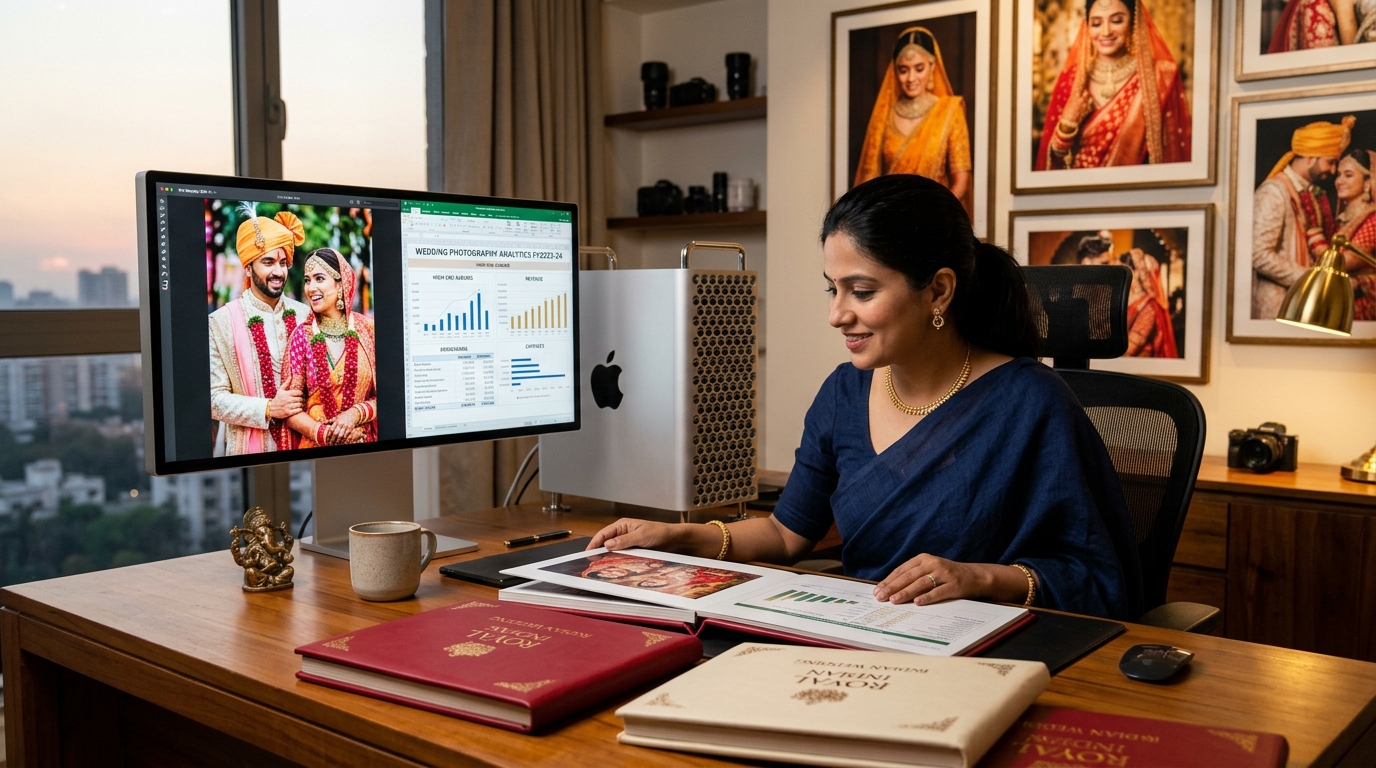
In the wedding industry, turnover is vanity, profit is sanity, but cash flow is king. Most photographers launch their studios as passionate visual artists rather than disciplined commercial managers. When a couple books a ₹1,80,000 three-day wedding package, the studio founder's mental accounting registers an immediate windfall. What gets overlooked is the severe timing mismatch and the multi-layered financial commitments required to execute and deliver that project.
The Indian wedding calendar is cyclical. Astrological dates (Shubh Muhurats) concentrate weddings into intense clusters between November and February. Cash floods into business accounts in lump sums, creating the False Wealth Syndrome: feeling wealthy because the account balance shows ₹15 Lakh, studio owners splurge on premium camera bodies, flagship lenses, or luxury lifestyle upgrades without setting aside tax reserves or operational capital.
When the seasonal slump arrives between April and August, fixed overheads—office rent, hardware EMIs, electricity, and salaried editors—continue unabated. Without segregated reserves, studios rapidly slip into negative cash flow, forcing founders to take high-interest personal loans or offer desperate discounts on upcoming wedding packages just to survive.
🧮 Deconstructing True Per-Wedding COGS: The Hidden Costs That Murder Margins
To achieve predictable financial stability, studios must calculate their true Cost of Goods Sold (COGS). COGS represents the direct expenses incurred to execute a single wedding. If you quote ₹1,50,000 for a standard 2-day wedding (Sangeet, Haldi, Wedding, and Reception), how much cash actually remains after clearing all project-specific liabilities?
Here is the realistic expense breakdown for an elite 4-person crew shooting a mid-tier Indian wedding in a metro or Tier-1 city:
- Senior Candid Photographer (2 Days): ₹16,000 (@ ₹8,000/day)
- Lead Traditional & Stage Photographer (2 Days): ₹10,000 (@ ₹5,000/day)
- Cinematographer & Gimbal Specialist (2 Days): ₹20,000 (@ ₹10,000/day)
- Drone Operator & Gear Rental (1 Day): ₹8,000 (Baraat & Varmala coverage)
- Lighting Assistant & Technical Runner (2 Days): ₹4,000 (@ ₹2,000/day)
- On-Site Crew Cabs, Travel & Meals: ₹6,000 (Transport & subsistence)
- Dedicated Storage & Archiving: ₹3,000 (1TB high-speed redundant HDD allocation)
- Outsourced Video Editing & Color Grading: ₹15,000 (3-min teaser + 45-min film)
- Premium Flush-Mount Album (40 Spreads): ₹20,000 (Printing, leather case & courier)
Total direct operational costs sum up to ₹1,02,000 in direct COGS! From your ₹1,50,000 package, your real gross contribution margin is only ₹48,000 (32%). From that ₹48,000, you must still cover studio rent, software subscriptions, equipment depreciation, marketing, taxes, and your own salary. When studios fail to track this unit-level math, they operate under the illusion of profitability while steadily bleeding reserves.
🔒 The Trapped Liquidity Nightmare: How Delayed Album Selections Freeze 25% of Cash
Even when pricing covers costs, an insidious cash flow trap plagues wedding studios: Trapped Deliverables Liquidity. The traditional Indian wedding payment structure almost universally leaves the final installment unpaid until physical album delivery:
- Booking Advance: 25% (Paid upon contract signing)
- Wedding Day Milestone: 50% (Paid on or before wedding day)
- Final Balance on Album Delivery: 25% (Paid upon physical album handover)
By the end of the wedding weekend, the studio has collected 75% of the fee. However, the studio has already paid 100% of freelance crew fees, travel bills, and must soon pay editors. Virtually the entire net profit margin for the studio is locked in that final 25% balance.
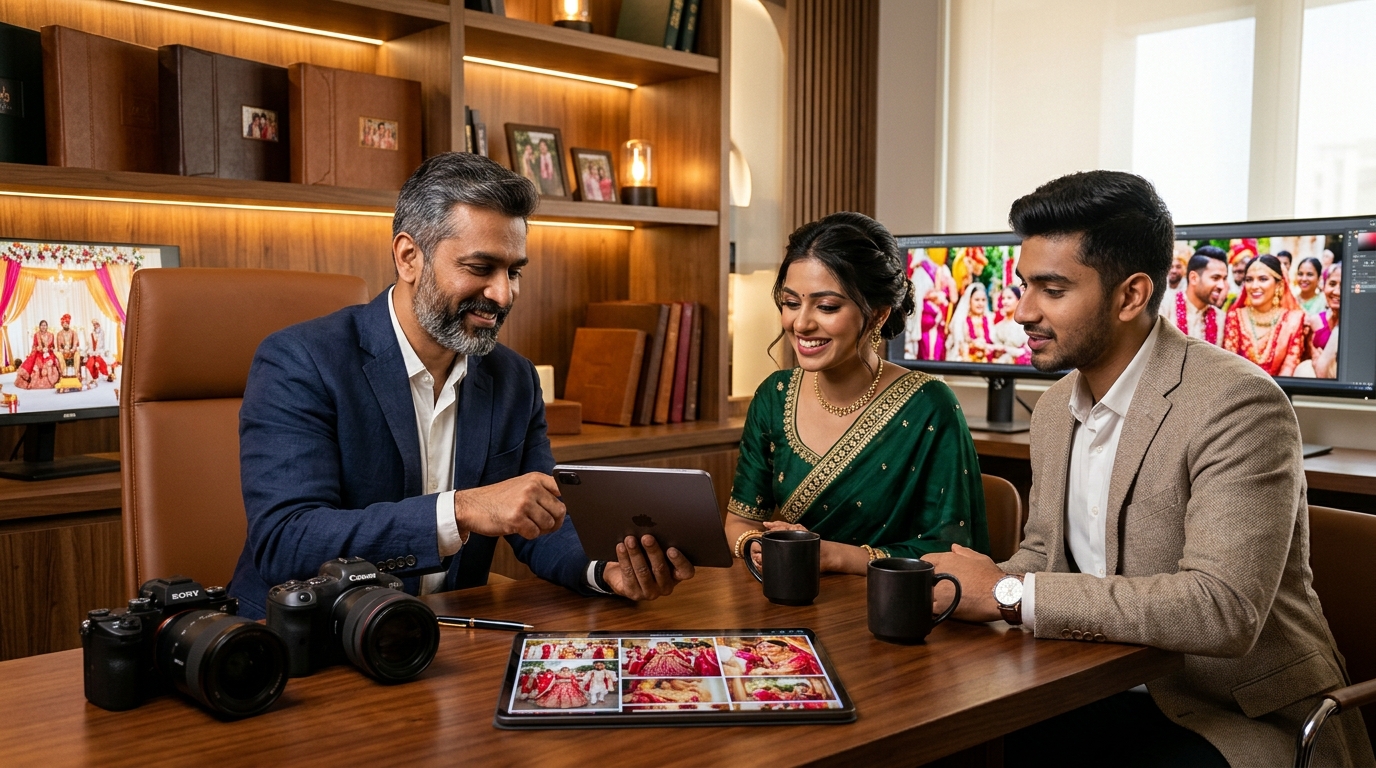
Then the bottleneck strikes: the studio sends 4,000 unculled JPEGs on Google Drive or a USB drive. The bride and groom experience severe decision paralysis. The in-laws want stage photos with distant relatives, the bride wants intimate candid portraits, and family members cannot agree. Six months later, the photos remain unselected. The studio cannot print the album and cannot collect the final ₹37,500 balance. Across 15 weddings, that represents ₹5.6 Lakh in trapped cash while the studio struggles through off-season expenses.
📊 Old Manual Studio Finances vs. The Modern Automated Pixelect Studio
High-performing wedding studios build automated operational systems that eliminate delays and protect financial reserves. Here is a clear comparison between traditional studios and modern studios using Pixelect SmartSelection:
| Operational Dimension | Old Manual Studio Way | The Modern Pixelect Way |
|---|---|---|
| Account Management | Single mixed account; revenues and expenses intermingled. | 3-tier segregated banking waterfall: Tax, COGS Escrow & Profit. |
| Client Photo Proofing | 4,000+ unculled JPEGs on slow Google Drive links or USB drives. | Mobile-first WhatsApp interactive PIN gallery with instant favoriting. |
| Average Selection Time | 60 to 120 days (Decision fatigue and endless follow-up calls). | 3 to 7 days (Couples curate favorites effortlessly on phones). |
| RAW File Extraction | Manual Windows Explorer searching across multiple cards (6–8 hours). | 1-Click Local Desktop RAW Auto-Copy extracts files in 15 seconds. |
| Trapped Cash Recovery | ₹5 Lakh+ tied up for 6+ months; awkward balance recovery. | 100% of final balance recovered within 14–21 days post-wedding. |
| Off-Season Resilience | Credit card debt, delayed vendor payouts, financial stress. | 6-month funded operational runway; smooth off-season stability. |
🛡️ The 3-Account Banking Waterfall: Safeguarding Studio Solvency
The most effective financial habit for studio founders is separating incoming cash into structural accounts. Operating an entire business from a single account creates the constant illusion of excess money. To insulate your studio from seasonal dry spells, open three accounts and allocate every client payment across this waterfall:
1. COGS & Vendor Escrow Account (45% Allocation)
When a client payment arrives, 45% immediately moves into this escrow account. This money is untouchable for personal expenses or studio upgrades. It exists strictly to clear associate photographer fees, cinematographer day rates, editor invoices, storage drives, and album printing costs. Because vendor funds are escrowed upfront, you never delay crew payouts or wait for client balances to pay your team.
2. Operational Runway & Tax Reserve Account (25% Allocation)
This account protects studio stability. It funds studio rent, utility bills, equipment maintenance, software licenses, and GST/income tax dues. Surplus funds accumulated during peak season remain untouched, building a 6-month Monsoon Slump Runway that keeps your studio fully operational during off-season months without requiring emergency loans.
3. Founder Salary & Studio Profit Account (30% Allocation)
After funding vendor escrow and operational reserves, the remaining 30% enters your profit account. From here, you pay yourself a predictable monthly executive salary. Surplus accumulated at year-end becomes an owner dividend or reinvestment capital for deliberate studio growth.
⚡ How Pixelect SmartSelection Solves the Proofing Bottleneck in 15 Seconds
Your cash flow velocity depends directly on how quickly you turn captured files into delivered albums. Pixelect SmartSelection transforms this post-production workflow for Indian studios.
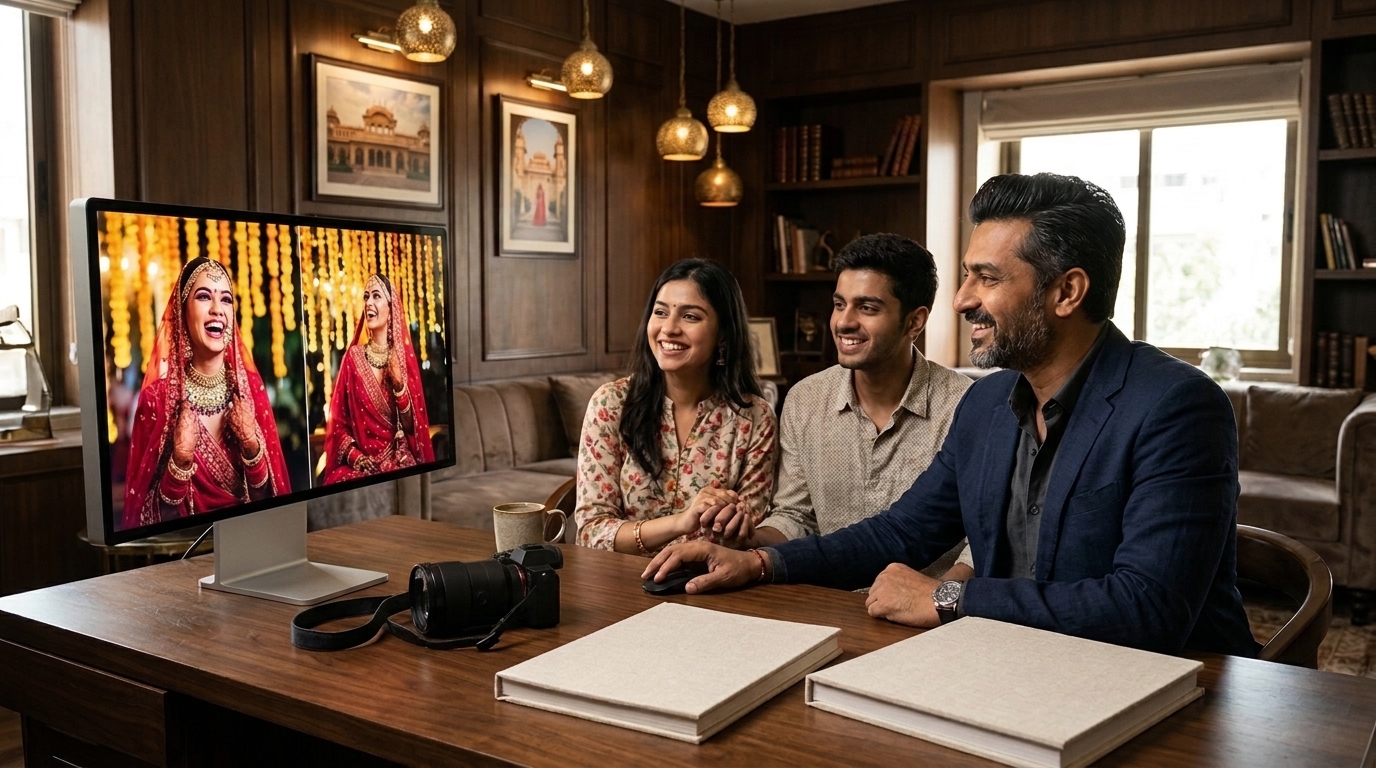
Instead of sending slow Google Drive folders, you export low-res previews and send a sleek, mobile-optimized selection gallery directly via WhatsApp. The client opens the link on their smartphone, enters a 6-digit PIN, and taps the heart icon to favorite photos. Couples can curate their selections effortlessly from their phones in just 3 to 5 days.
Once selections are submitted, Pixelect eliminates manual file searching entirely. Instead of spending 6 hours in Windows Explorer matching filenames across multi-camera folders, you download a lightweight .smartselection file and launch the desktop runner. The system locates all selected high-res RAW files and auto-copies them into an album folder in under 15 seconds. Albums are designed and printed within 2 weeks, allowing you to collect your final 25% balance weeks ahead of competitors.
✅ 4-Step Actionable Checklist for Bulletproof Studio Profitability
Implement these key financial and workflow steps to protect your studio's profitability and cash flow:
Review your last 5 weddings. Sum every rupee spent on associate photographers, cinematographers, drone rentals, travel, editing, and album printing to determine your exact direct COGS and true gross margin percentage.
Set up 3 segregated accounts: 45% for Vendor Escrow & Direct COGS, 25% for Operational Runway & Taxes, and 30% for Founder Salary & Profit. Automatically distribute every incoming client payment.
Replace Google Drive links with mobile-friendly Pixelect interactive PIN galleries delivered directly to clients via WhatsApp, reducing selection time from 90 days to under 7 days.
Use Pixelect's 1-click desktop runner to auto-extract selected RAW files across multi-camera storage folders instantly, accelerating album production and unlocking trapped balance payments.
❓ Frequently Asked Questions (FAQs)
Q1: How should I structure payment milestones to minimize financial risk?
The recommended milestone structure is 25% Advance Booking Token (reserves date, non-refundable), 50% Due 7 Days Before Wedding (covers crew and gear preparation), 15% Upon Delivery of Digital Preview & Selection Link (before retouching), and 10% Final Balance upon Album Handover. This reduces trapped album balance risk from 25% to just 10%, securing your operating cash flow regardless of client selection timing.
Q2: What is a healthy net profit margin for an Indian wedding photography studio?
For an established studio billing ₹30 Lakh to ₹70 Lakh annually, a healthy Net Profit Margin (after paying executive salaries and covering all operational overheads) should range between 35% and 45%. Margins below 25% indicate underpriced packages, excessive unused equipment overhead, or unmonitored crew and editing expenses.
Q3: How does Pixelect SmartSelection help recover trapped balances faster than Google Drive?
Google Drive overwhelms clients with dense folders that load slowly on mobile networks, leading to prolonged decision fatigue. Pixelect delivers a mobile-native web app directly on WhatsApp. Clients easily view and favorite images using simple gestures on their smartphones. This reduces selection time from an average of 75 days to under 5 days, enabling your studio to print albums and recover final balance payments weeks faster.
Stop Chasing Clients for Selections. Unlock Your Trapped Balance Payments in 7 Days.
Join 1,200+ elite Indian wedding studios using Pixelect SmartSelection to deliver ultra-fast WhatsApp PIN galleries, empower frictionless client favoriting, and auto-copy selected RAW files in 15 seconds flat.